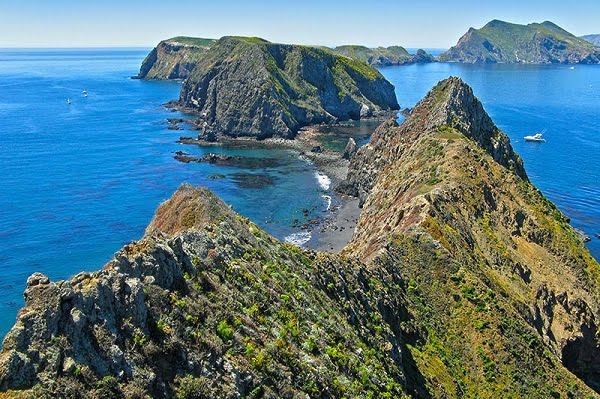
Channel Islands National Park Hiking Page

Welcome to the Channel Islands National Park Hiking Page
Here you will find information on hiking trails for day hikes and backcountry exploration, biking paths, and wilderness areas of interest for hikers.
-SPONSORED LINKS-
Channel Islands Lodging
Channel Islands Hotels
Channel Islands Maps
Channel Islands Camping
Channel Islands Weather
Channel Islands Vacation Rentals
Harbor Seals

Sponsored National Park Search

Harbor Seals - Corel ©

Hiking Guide

Boating Fishing Hiking Kayaking Regulations


Hiking Information

There are miles of hiking trails on the different islands. Please stay on trails and obey closure signs, this is for your safety and to protect fragile island resources.


Anacapa Island

Near the small visitor center there is a 1.5 mile self guiding nature trail that explores East Anacapa.


San Miguel Island

There is a trail from the landing in Cuyler Harbor across the island to Adams Cove.


Santa Barbara Island


Santa Cruz Island

There is a trail from Potato Harbor along the east side of the island to Smugglers Cove.


Santa Rosa Island

There is a trail from Northwest Anchorage along the east coast to East Point.


Boating Information

San Miguel Island

There are no piers or moorings at San Miguel Island, therefore, all private boaters must anchor. Overnight anchorages are restricted to Cuyler Harbor and Tyler Bight.

Visitors may land only on the beach at Cuyler Harbor. No landing is allowed on rocks or islets. Visitors may walk the beach at Cuyler's Harbor and hike up Nidever Canyon to the Ranger Station. To hike beyond the ranch site a backcountry permit must be obtained from park headquarters prior to mainland departure. For landing assistance, weather conditions, and to arrange a meeting time and place, contact the San Miguel Island Ranger at Cuyler's Harbor on VHF Channel 16.

Santa Rosa Island

Boaters may land along coastline and on beaches without a permit for day-use only. Beaches between & including Skunk Point and East Point are closed from March 1st to September 15th in order to protect the threatened snowy plover. Sandy Point at the west end is closed to landings year round.

For landing assistance, weather conditions, and orientation contact the Santa Rosa Island Ranger at Becher's Bay on VHF Channel 16. Boaters may not use the mooring buoys in Becher's Bay. They are reserved for the National Park Service, the park concessionaire, and the private ranch.

Santa Cruz Island

Private boaters may land on the eastern 24% of Santa Cruz Island without a permit at any time. This area is owned by the National Park Service and is east of the property line between Prisoners Harbor on the north side and Valley Anchorage on the south side.

Boaters may contact the Santa Cruz Island ranger via VHF Channel 16 for information prior to landing. A landing pier is avaliable at Scorpion, but dingies are not to be left tied to the pier. Boaters should be prepared for beach landings at all other island locations. Due to surf and swell conditions, boaters should use extreme caution when making surf-landings at any beach, especially Smugglers Cove and those beaches facing south and southeast between San Pedro Point and Valley Anchorage. The pier at Prisoners is unsafe and is not to be used at any time. It is planned to begin reconstruction of the pier in early 2001. Buoys are reserved for the National Park Service and the U.S. Coast Guard.

A permit to land on the western 74% of Santa Cruz Island is required from The Nature Conservancy. A fee is charged and no overnight island use is permitted. It may take 10-12 days to process the request. Permit applications are available at the Channel Islands National Park Visitor Center or by contacting the Santa Cruz Island Preserve, P.O. Box 23259, Santa Barbara, CA 93121, 805-964-7839

Special fishing and closure regulations apply to several areas within Channel Islands National Park and Channel Islands National Marine Sanctuary. Please refer to the National Marine Sanctuary Program Synopsis of Regulations brochure, available at the Channel Islands National Park Visitor Center, for maps and specific information, To protect the island wildlife, including the island foxes from introduced disease and parasites dogs and other pets are not allowed ashore on any of the islands


Kayaking Information

Sea Kayaking Channel Islands National Park is a unique and rewarding way to experience this pristine marine environment. You will find solitude and splendor while paddling along the routes used by the first visitors to the islands. Here also you will face new challenges and adventures and you may encounter unexpected dangers. This web page is designed to help you in planning a safe, enjoyable and environmentally sound sea kayaking trip in the park.

Visitors with their own kayaks who would like to explore Channel Islands National Park may contact the park boat concessionaires, who will transport kayaks to the islands on their public trips for an extra fee. The concessionaires offer year-round transportation to the islands for day visits and camping trips:

Kayakers may also paddle from the mainland across the channel to the islands (due to conditions, most of these cross-channel trips are limited to Anacapa Island). However even this shortest 12 mile paddle is not for the novice or anyone who is not properly trained, conditioned and equipped.

Currents, shifting swells and strong winds can stretch a normal 3-to4-hour trip to Anacapa Island into a 6-hour struggle. The strongest currents are often encountered near the island. The paddle from Oxnard or Ventura also takes the kayaker across some of the busiest shipping lanes in California. Potentially dense fog and ship speeds of 25 to 35 knots present a special hazard to kayakers while crossing the channel.

Local Kayak Outfitters Visitors may kayak with one of several outfitters that offer a variety of different kayak trips to the Channel Islands. The trips are moderate to strenuous in nature, but some do not require previous kayaking experience. Most kayak excursions are offered from May through October. Some of the outfitters also offer kayaks for rent. For a current listing of outfitters and rental sources for kayaks perform an internet search, consult local phone books or contact the Park Visitor Center.

Safety

General Safety Safety requires good planning and common sense. Sea kayaking is potentially hazardous, even for experienced kayakers. Before embarking on your Channel Islands sea kayaking adventure, be sure to obtain current weather and sea condition information. The NOAA Real Time Local Weather Site provides up to the minute weather for the local area. Carefully selecting and equipping your paddlecraft is essential. Craft should be of a sea kayak design. Paddlers will help insure a safe and rewarding trip for themselves if they possess the following:

Equipment Checklist

Experienced sea kayakers recommend the following items:

A GPS is also recommended for the group to assist in navigation. Cell phones work from most island locations, but should not be depended on as the southern sides of the islands can be in service shadows

The National Park Service recommends that a float plan be filed with a responsible party before beginning your trip. Before paddling across the Santa Barbara Channel, float plans may also be filed with a local harbor master's office.

Names and addresses for the kayakers, as well as emergency phone numbers, should be listed. Plans should also include the number of kayaks and kayakers on the trip as well as the color, size and type of craft used. Any survival and special emergency equipment should be listed (EPIRB, VHF, food rations, flares, etc.). The place, date and time of departure and return should be logged as well as destination(s). This information can be invaluable for a search operation if something goes wrong. At the end of your trip is is recommended that you close your float plan.

Weather Conditions are most ideal for kayaking from August through October, with relatively calm wind and sea conditions. Kayaking is possible during other monthly, but with much greater chance for adverse wind and seas along with unexpected changes.

High winds may occur regardless of the forecast. Forty knot winds are not unusual for Santa Rosa and San Miguel Islands. Anacapa and Santa Barbara Islands generally have more moderate winds. Winds are often calm in the early morning and increase during the afternoon. Generally the wind comes from the northwest, but kayakers must also be prepared for strong east or Santa Ana winds.

Dense fog is common during the summer months, but may occur at any time, making chart and compass navigation mandatory. Ocean currents of considerable strength may be encountered both neat and offshore from the islands. Ocean water temperatures range from the lower 50s(F) in the winter to the upper 60s(F) in the fall.

Sea Caves can be very dangerous-- large waves or swells can fill a cave unexpectedly. Be extremely careful and wear a helmet at all times when exploring sea caves.

Kayaking without Impacts

The protection and preservation of your park's biological, cultural and historical resources is a major mission of the National Park Service. By following the regulations and guidelines listed below, you can help protect these rare and unique treasures of Channel Islands National Park for future generations to enjoy.

As in all national parks, natural and cultural resources are protected under federal law. Visitors may not collect, harass, feed, or otherwise harm the native wildlife, plant life or other natural and cultural resources of Channel Islands National Park. This includes, but is not limited to, vegetation, animals, rocks, shells, feathers, and other natural, archeological, and historic features within the park. Please leave all resources as you find them, what you found interesting will bring enjoyment to others who follow in your footsteps. Preserving your National Park is your responsibility.

Kayakers should also be sure to obtain the Channel Islands National Park brochure / map and the Channel Islands National Marine Sanctuary (NOAA/NMS) Synopsis of Regulations map


Regulations

Archeological sites and other cultural resources, such as shipwrecks, are protected under federal law. It is illegal to disturb or damage these sites in anyway. These sites are still common on the islands today because of the protection that has been given them. With ease of kayaking access to these sites comes an enhanced responsibility to respect and protect them.

Tidepool areas throughout the park are protected. Collecting is illegal. Be careful where you walk. Careless trampling destroys tidepool animals.

Possession of a valid California State fishing license is required to fish, and all California Department of Fish and Game Regulations apply.

Pack out what you pack in. There are no trash cans on the island. Please do not place trash in outhouses.

Pets are not allowed on the islands for the protection of wildlife and your pets. Service animals require special clearance.

No smoking on trails or in brush areas due to high fire hazards. Please smoke only on the beach or in the campground.

To protect wildlife, landing is prohibited on all offshore rocks and islets.

Rock climbing is prohibited.

Firearms and firework are prohibited.

Do not directly or indirectly feed the native wildlife, protect your food from wildlife. Human food is generally not good for animals. Wildlife may become habituated to humans if they learn to associate humans or camps with food. Besides becoming a nuisance, habituated animals may bite and transmit diseases including hantavirus. Animals also may injure themselves by consuming plastics which obstruct their digestive systems, causing them to starve.

Under federal law it is illegal to disturb and/or harass seabirds, or seals and sea lions. Harassment may be interpreted as any action that modifies the behavior of birds and mammals.

California's Channel Islands offer some wonderful opportunities for wildlife viewing. There is an abundance and diversity of marine creatures unmatched anywhere else in southern California. Pinnipeds (seals and sea lions) and sea birds choose to live and breed on islands and offshore rocks to escape predators and disturbance. In the past, these animals were exploited for eggs, feathers, meat, blubber, and fur. Now they are protected. In the 1970's, the Marine Mammal Protection Act and the Migratory Bird Treaty Act became law and prohibit harming or disturbing mammals and birds. Several species are coming back from the brink of extinction. Even though you just want to watch them, remember that this is the last place for many of these creatures to live in the quiet seclusion they require. Please respect that and follow these guidelines to avoid disturbing animals.

Guidelines

Avoid approaching areas with birds, seals, and sea lions that are roosting, nesting or pupping.

Look ahead and give animals a 100 yard clearance if possible.

Be alert for birds that you may not be able to see, around guano covered rocks and pinnipeds hauled-out on secluded beaches. Cormorants and pelicans are disturbed easily and may knock their eggs out of the nest and abandon their nests if they are flushed suddenly from the cliff. Adult birds will stay away from the nest while people are in the area. The eggs or chicks may overheat in the sun without parental protection. Gulls and ravens are less shy of people and will take advantage of a disturbance to steal eggs and chicks. Entire colonies have been lost this way.

On San Miguel and Santa Rosa Islands, the snowy plover, a threatened shore bird, establishes its fragile nests on many sandy beaches from mid-March to mid-September. Please refer to the specific bulletins on these islands for areas to avoid during these periods.

Pupping harbor seals, sea lions and other pinnipeds also are sensitive to any type of human disturbance and may abandon their pups. In addition, all of these animals are easily disturbed when resting or preening on rocks or secluded beaches at the water's edge . Rest periods are important to their energy budget. Approach new territory slowly and quietly. If you see animals close by, quietly move away. There may be more animals than you first see.

All rock islets within Channel Islands National Park (park boundary extends into one nautical mile offshore around each island) are closed to access above mean high tide.

It is also recommended that visitors stay out of sea caves, including dry caves behind beaches, during the spring and early summer when sea birds are nesting.

Landing on offshore rocks, entering caves, and making loud noises in these areas may cause sea birds to abandon their nests. Black oystercatchers, western gulls, and Cassin's auklets are a few of the birds that nest on offshore rocks. Pelagic Cormorants nest on tiny ledges of sea cliffs and just inside the mouths of caves. Pigeon guillemots and ashy storm-petrels nest in crevices and under rocks and debris inside caves. Many sea birds leave their nests alone while feeding, so even if birds are not present, a misplaced step could crush an egg or chick by moving a loose rock.

Bats also hibernate in some of the dry sea caves and waking them can cause a fatal depletion of energy reserves.

There may be resting birds and pinnipeds in caves and on offshore rocks even after the breeding season. Under federal law it is illegal to disturb and/or harm these animals. Be cautious of sea lions resting on rocks or beaches in the backs of caves. Startling a sea lion that you can't see in the dark could be hazardous for you as well.

In order to be rewarded with displays of interesting natural behavior, never chase any animal and do not try to see how close you can approach them. If an animal starts to look alarmed (appears agitated or starts watching you) then you are too close. Even though it may not show obvious agitation, being too close can cause severe stress. Sit calmly at a safe distance. Let the animal's natural curiosity take over and it may approach you.

Let sea birds and sea lions adjust to your presence and you will be rewarded with displays of interesting natural behavior. For your safety as well as their's, do not approach sick or injured animals. Alert a ranger or a wildlife rehabilitation center.

Remember, these sea birds and pinnipeds have nowhere else to go. Do your part to pick up any trash you find and please pack out all trash. Plastics especially can cause problems if ingested or entangled in by animals. Help educate others. Let's protect our wildlife for all to see.


Fishing, Game, and Marine Resource Regulations

Possession of a valid California State fishing license is required to fish, and all California Department of Fish and Game Regulations apply.

The water one nautical mile around Anacapa, San Miguel and Santa Barbara Islands are California State Ecological Reserves. Special resource protection regulations apply. Contact the Channel Islands National Park headquarters and island rangers for more information on fish, game, and marine resources regulations. Fishing is allowed in designated areas only, a valid state fishing licence is required and all state regulations are enforced. Shore fishing is prohibited on San Miguel Island and the landing area on East Anacapa is a protected no take area.


Channel Islands National Park Links
Bullet Activity & Calendar Page
Bullet Address, Email & Phone Guide
Bullet Anacapa Island
Bullet Boating Guide
Bullet Brochures, Maps, Written Info
Bullet Brown Pelican
Bullet Camping Guide
Bullet Chat
Bullet Ecology
Bullet Elephant Seal
Bullet Establishment
Bullet Fees
Bullet Fishing
Bullet Hiking Guide
Bullet History
Bullet Intertidal Plants and Animals
Bullet Island Fox
Bullet Jobs, SCA, Volunteer Positions
Bullet Kayaking Guide
Bullet Location
Bullet Lodging Guide
Bullet Map Guide
Bullet Park Information
Bullet Park Regulations
Bullet Pet Information
Bullet Pygmy Mammoth
Bullet San Miguel Island
Bullet Santa Barbara Island
Bullet Santa Cruz Island
Bullet Search
Bullet Sights Guide
Bullet Size and Visitation Info
Bullet Tidepool Tips
Bullet Travel Guide
Bullet Visitors Guide
Bullet Weather

Channel Islands National Park
California National Parks
Back to National Parks


by John William Uhler

Copyright © 1995 - 2007 Hillclimb Media

This site is in no way associated with the United States Government, the Department of the Interior or the National Park Service

Demand Media Knowledge